In this article
Your water bill has jumped and nobody in the house has changed a thing. Or there's a damp patch on the passage wall that wasn't there last month. So you pick up your phone and type "Table View plumbers", and now you have a page of names and no idea which one to call.
If you have a few minutes, read on. This guide covers what to look for in a plumber, how to check for a hidden leak yourself, and what leak detection in Table View actually involves. A little knowledge will save you money whoever you end up calling.
What to expect from plumbers in the Table View area
Table View is not a new suburb. Many of its homes went up in the 1970s and 1980s, and a lot of them still run on the original galvanised or copper pipes. Add sandy coastal soil and salt air, and you get a particular set of plumbing problems.
Good plumbers in the Table View area know this before they arrive.
- Older pipes. Low pressure in an older house often points to galvanised pipes corroding from the inside.
- Sandy soil. A blocked drain here is as likely to be sand as fat.
- Shared plumbing. In the many sectional-title complexes around the suburb, a leak that shows in one unit can start in another.
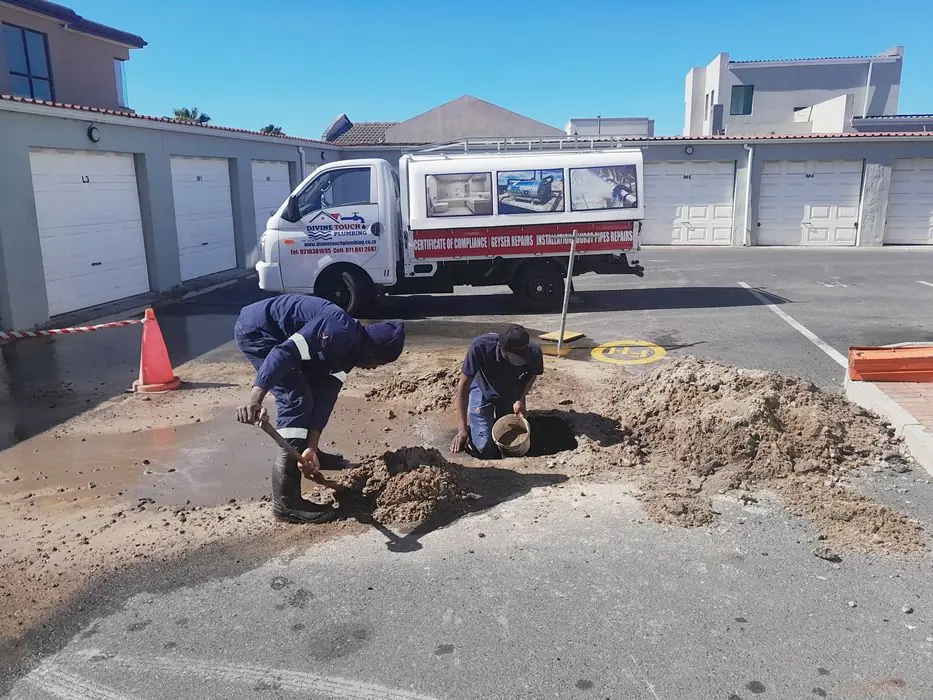
That local knowledge matters. It means less guessing, fewer holes in your walls and a shorter job. Our own base is next door in Parklands, and our plumbers are in Table View every day.
Common plumbing problems in Table View homes
Most calls we get from Table View come down to five problems. Knowing which one you have helps you describe it on the phone.
| Problem | What you'll notice | The usual fix |
|---|---|---|
| Hidden pipe leak | A rising water bill, a damp wall or floor, a meter that turns with every tap off | Leak detection, then a targeted repair |
| Ageing galvanised pipes | Low pressure, brown water, pinhole leaks that keep coming back | Pipe repair or replacing the worn section |
| Sand-blocked drains | Slow drains, gurgling, smells from the outside gullies | High-pressure jetting |
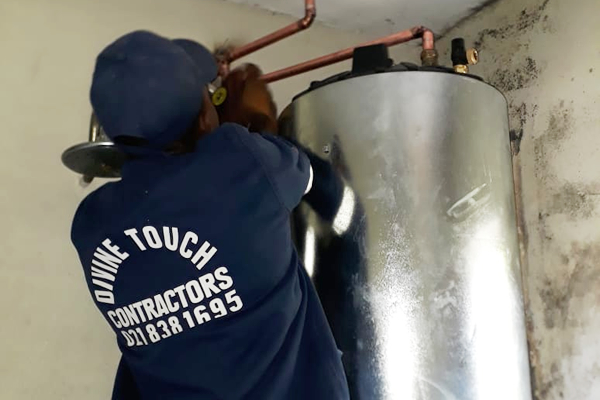
| Worn geyser | Lukewarm water, a dripping overflow pipe, rust at the base | Geyser repair or replacement |
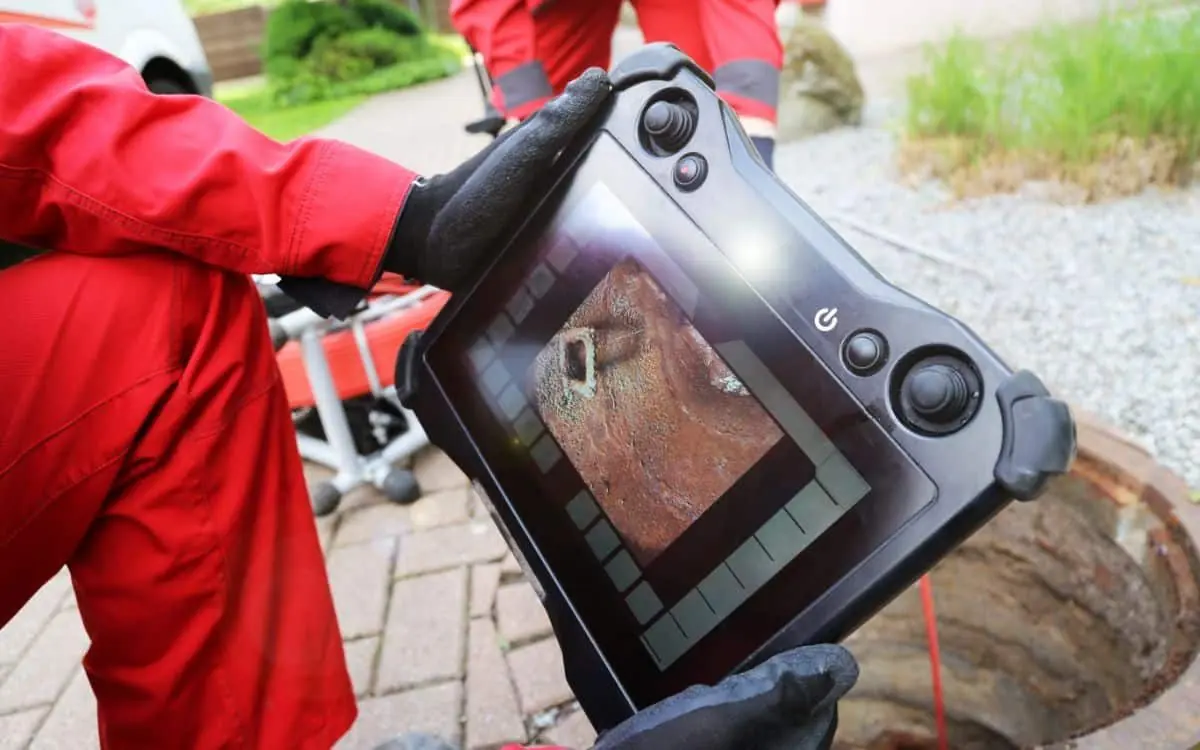
| Shared drain trouble in a complex | Several units backing up at the same time | Camera inspection to find the fault |
Signs of a hidden leak in a Table View home
A burst pipe announces itself. A hidden leak doesn't, and it can run for months inside a wall or under a floor. These are the signs to watch for.
- A water bill that climbs for no reason. Compare it with the same month last year.
- Damp, stained or mouldy patches. Look at ceilings, skirtings and the walls behind bathrooms.
- The sound of running water when every tap is closed.
- A warm spot on the floor, which can mean a hot-water pipe is leaking below it.
- A green or soggy strip of garden or paving in a dry week.
- Water pressure that drops for no clear reason.
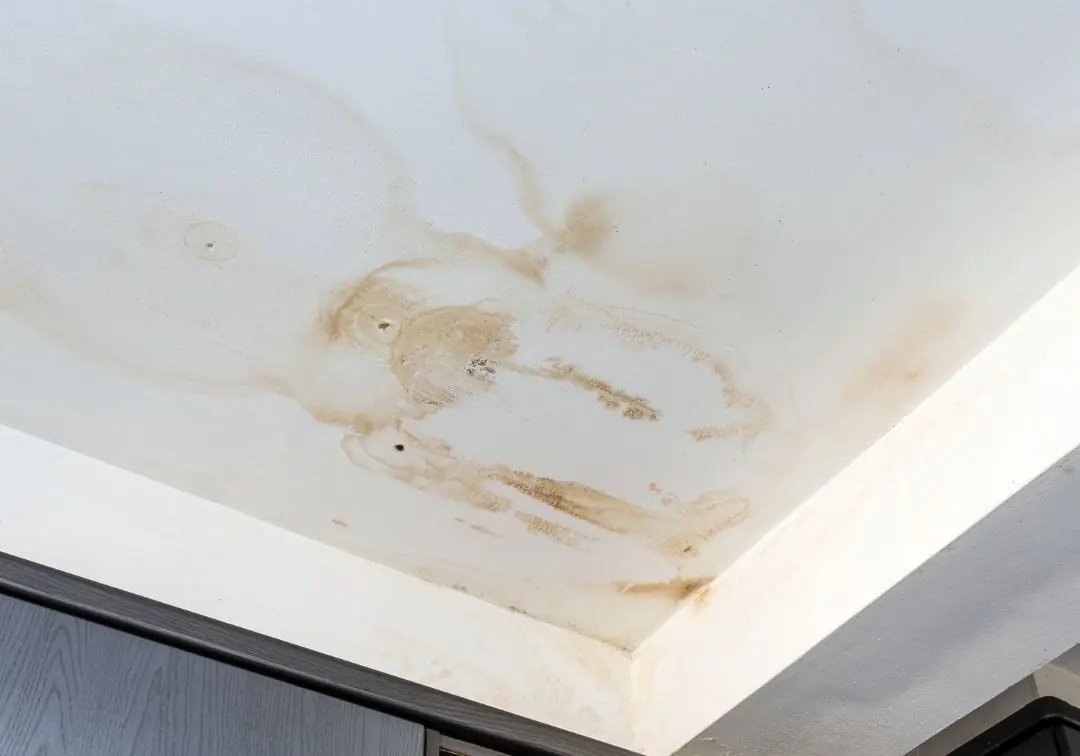
One sign is a reason to check. Two or more is a reason to do the meter test today.
Leak detection in Table View: check your meter in 15 minutes
Before you call anyone, do this test. It costs nothing and tells you whether you have a leak at all.
-
Turn off every tap and appliance
That includes the washing machine, dishwasher, irrigation and the garden tap. Nobody flushes a toilet until you're done.
-
Find your water meter
It's usually in a small box on the pavement or just inside your boundary wall.
-
Write down the reading
Take a photo if that's easier. Note the small red dial or spinning wheel too, because it shows even tiny flows.
-
Wait 15 minutes
Use no water at all during this time.
-
Check the meter again
If the numbers have moved, or the small wheel is turning, water is leaving your pipes somewhere. You have a leak.
-
Narrow it down
Close the stopcock where the supply enters the house and repeat the test. If the meter still moves, the leak is underground between the meter and the house. If it stops, the leak is inside.
Remember: any leak on your side of the meter is yours to fix and yours to pay for. The sooner you find it, the less water you pay for.
How we find a leak without digging up your home
A meter test tells you there is a leak. It doesn't tell you where. That's the hard part, and it's the part worth calling a professional for.
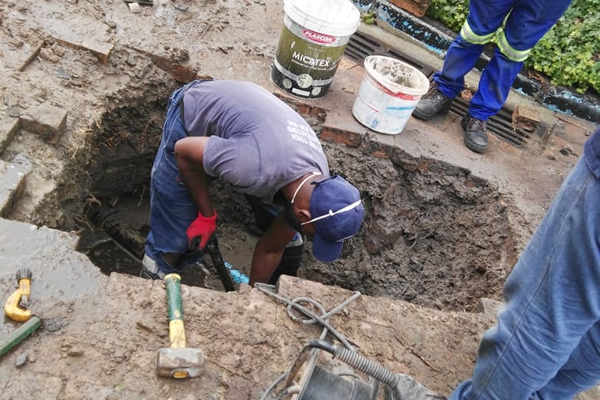
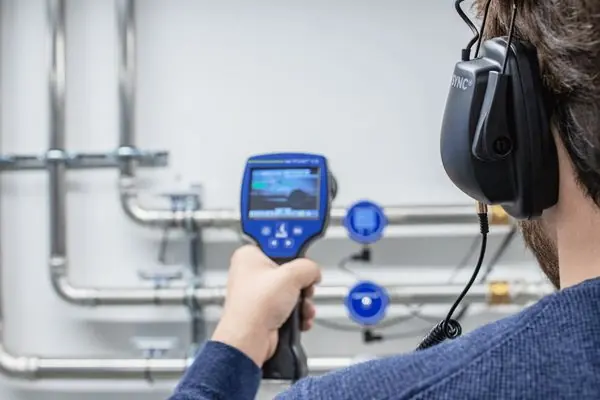
The old way was to guess, chop into a wall, and guess again. We don't work like that. Our leak detection is non-invasive, which means we pinpoint the leak first and open up only the spot that needs repair. We use three main tools.
- Thermal imaging. A thermal camera shows the temperature difference that leaking water leaves behind a wall or ceiling.
- Acoustic listening. Water escaping a pipe under pressure makes a sound. Sensitive microphones let us follow it to the spot, even under concrete.
- Tracer gas. For the hardest leaks we fill the empty pipe with a safe gas and detect where it comes out.
Where a drain or sewer line is the suspect, we send a camera down the pipe so you can see the fault yourself. Then we quote on the repair, and you decide.
One small hole in one wall beats a row of them. Your tiles will thank you.
Five checks before you hire Table View plumbers
These five checks take about ten minutes and work on any plumbing company, including ours.
-
Are they PIRB-registered?
Ask for the plumber's registration number and look it up on the PIRB public register. It takes two minutes. Only a registered plumber can issue a Certificate of Compliance.
-
Are they actually nearby?
"Table View plumbers" on an advert can mean a call centre across the city. Ask where the bakkie is coming from. Our head office is in Parklands, next door.
-
Will they quote before they start?
You should know the call-out fee on the phone and have a quote for the repair before any work begins. Our call-out fee is R450 within Cape Town. For all other prices, contact our office on 021 838 1695.
-
Do they guarantee the work?
A plumber who trusts their own work puts it in writing. We give a one-year workmanship warranty.
-
What do the neighbours say?
Read recent Google reviews, not just the star rating. Look for mentions of your kind of problem and your area.
We wrote a longer version of this checklist in our guide to choosing between plumbing companies in Parklands. It also covers what to do in the first ten minutes of an emergency.
About Divine Touch Plumbing
We're a PIRB-registered team of more than 12, with 12 years in the trade and a 4.9 rating from over 200 Google reviews. We work across Table View, Parklands, Blouberg, West Beach, Milnerton and Melkbosstrand.
We do everything from a dripping tap to a full bathroom re-pipe: leak detection, drain jetting, camera inspections, geysers, burst pipes and general plumbing. We also work with body corporates and managing agents on shared-pipe problems in complexes.
Quick answers
Are you really Table View plumbers?
Our head office is at Leonardo Park on Parklands Main Road, a few minutes from Table View. We work in the suburb every day, and we're not a call centre sending a van from across the city.
How much does leak detection in Table View cost?
Our call-out fee is R450. Leak detection and repair prices depend on the job, so please contact our office on 021 838 1695 for current pricing. You'll have a quote before any work starts.
How do I know if I have a hidden leak?
Watch for a water bill that climbs for no reason, damp or mouldy patches, the sound of running water when everything is off, or a meter that turns with all taps closed.
Can a leak under a concrete floor be fixed?
Yes. We locate it first, so we lift only the section above the leak. Sometimes rerouting the pipe is a better option than breaking the floor, and we'll tell you if so.
Do you work in complexes and with body corporates?
Yes. Shared geysers and shared drains are common in Table View complexes, and we're used to working with trustees and managing agents.
Are Table View plumbers available 24 hours?
Ours are. Call 071 841 2687 any time, day or night, including weekends and public holidays.
Which areas near Table View do you cover?
Flamingo Vlei, Sunningdale, Parklands, Blouberg, West Beach, Sunset Beach, Milnerton and Melkbosstrand.
Think you have a leak? Call us today
A small leak doesn't fix itself. It gets bigger, and so does the water bill. If your meter is turning or a wall is damp, call or WhatsApp 071 841 2687 at any hour, or request a quote online. For prices, phone the office on 021 838 1695.