In this article
With electricity tariffs rising year after year in South Africa, water heating remains one of the largest continuous expenses for local households. Standard electric geysers account for roughly 40% to 50% of your monthly electricity bill.
For Cape Town homeowners looking to minimise municipal bills and maintain reliable hot water during power cuts, switching to solar is an appealing option. But is a solar geyser actually worth the upfront investment?
1. The Financial Breakdown: Savings vs. Upfront Cost
To determine if a solar geyser is worth it, you have to analyse the return on investment (ROI).
- The Monthly Savings: Because a solar water heater relies on thermal sun energy rather than grid electricity, most households see their water-heating costs drop by 70% to 90% annually. Across your total municipal bill, this translates to an immediate 30% to 40% overall monthly saving.
- The Payback Period: A typical domestic solar geyser installation or retrofit in South Africa pays for itself through electricity savings within 3 to 5 years. Considering a quality solar system has a lifespan of 15 to 20 years, you enjoy over a decade of essentially free hot water after reaching the break-even point.
2. Beyond the Electricity Bill: Key Practical Benefits
Hot Water During Grid Outages
Unlike standard electrical geysers that leave you taking cold showers during load shedding or localised suburban power outages, a solar system heats water during the day using natural sunlight. Paired with a well-insulated tank, your household maintains hot water regardless of power grid failures.
Increased Property Value
Energy efficiency is a major selling point in the Western Cape property market. Homes equipped with certified renewable energy solutions, such as solar geysers, stand out to prospective buyers and command higher resale values.
Reduced Carbon Footprint
Water heaters consume a massive amount of coal-generated power. Switching to a solar collector reduces your household's carbon emissions significantly each year without compromising on daily living comfort.
3. Direct vs. Indirect Solar Geysers: Choosing for Cape Town Conditions
When investing in a solar geyser, selecting the correct system type for your specific area is crucial to protect your equipment:
Direct (Open-Loop) Systems
Water from your mains supply flows directly through the solar collectors on your roof to be heated.
Is it worth it? Yes, ideal for coastal Cape Town regions with mild winters and zero frost. It is efficient, lower cost, and highly reliable.
Indirect (Closed-Loop) Systems
Uses an anti-freeze heat transfer fluid inside the roof collectors, which transfers heat to your domestic water via an internal heat exchanger.
Is it worth it? Necessary for inland or elevated areas prone to heavy winter frost, preventing the collector pipes on your roof from freezing and bursting.
4. Avoiding Costly Pitfalls: SANS 10254 Compliance
A solar geyser is only worth the investment if it is installed correctly. In South Africa, all geyser installations must comply strictly with SANS 10254 regulations.
An uncertified or poorly fitted installation risks severe structural water damage and can result in rejected insurance claims. Every compliant setup requires:
- Drip Tray & Overflow Line: A properly fitted drip tray and overflow line to route minor leaks safely outside.
- TPR Valves: Temperature and Pressure Relief (TPR) valves to manage pressure buildups safely.
- Vacuum Breakers: Vacuum breakers to prevent back-siphonage and structural tank collapse.
Frequently Asked Questions (FAQs)
How long does a solar geyser system last?
A high-quality, professionally installed solar geyser system typically lasts between 15 and 20 years with minimal maintenance. Annual inspections and checking the sacrificial anode periodically will help ensure maximum lifespan.
Will I still have hot water on cloudy or rainy days in Cape Town?
Yes. Modern solar geysers are fitted with a backup electrical heating element controlled by a smart timer or controller. During extended periods of rain or heavy overcast weather, the backup element kicks in automatically to keep your water at your set temperature.
Can I convert my existing electrical geyser into a solar system?
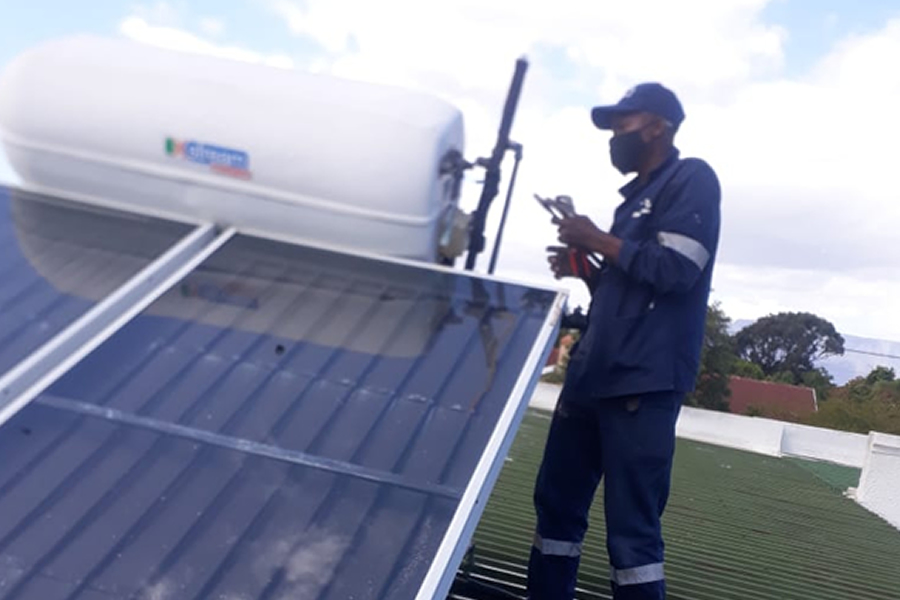
In many cases, yes. If your current electric geyser is in good condition and solar-ready, a certified plumber can perform a solar retrofit by installing roof collectors and connecting them to your existing tank, reducing upfront costs significantly.
Do solar geysers require a lot of maintenance?
No. Solar systems are built with very few moving parts. We recommend an annual servicing check to clear any sediment buildup, check safety valves, and inspect the sacrificial anode.
The Verdict: Is It Worth It?
Yes. For the vast majority of Cape Town homeowners, a solar geyser is one of the safest, high-return home improvements you can make. It yields immediate utility bill relief, provides protection against future electricity price hikes, and ensures your home stays supplied with hot water.
Get an Expert Assessment in Cape Town
Whether you want to retrofit your existing unit with solar collectors or install a brand-new complete solar water heating system, Divine Touch Plumbing provides fully certified, SANS-compliant solar geyser installations across Parklands, Table View, Milnerton, Blouberg, and Durbanville.